14 July 2026
Why Getting a Real Letter Feels So Good (Your Brain on Post)
Think about the last time something good came in the post. Not a parcel you ordered yourself, which is really just an errand you outsourced. Actual post. Your name in a hand or a typeface that meant a person, an envelope worth opening slowly.
For most of us it has been a while. The average mailbox now serves one purpose: moving paper from the postal service to the recycling bin with a brief pause in your hands. And yet ask anyone over fifty what the post used to feel like and you get the same answer. It was the hinge of the morning. You heard the letterbox and you went to look.
The anticipation is the point
Psychologists who study enjoyment keep landing on the same finding: anticipation is not the warm-up act for a pleasure, it is a large share of the pleasure itself. A holiday is enjoyed three times, once in the booking, once on the beach, once in the retelling. Email killed the first part of that for correspondence. There is no anticipating something that arrives forty times a day.
A letter that comes once a month on a known day rebuilds the mechanism. You know it is coming. You do not know exactly what is in it. That combination, certain arrival, uncertain contents, is the same loop that makes a serial drama work, and it is why letter subscriptions have quietly become a thing again, from historical story letters to letters about birds.
Paper is slower, and slower is the feature
A screen rewards you for leaving. Every paragraph read on a phone is read against the pull of everything else on the phone. Paper has no such argument going on. Readers of physical text consistently report better focus and better recall than screen readers, and you do not need a study to believe it. You already know which of the two you read in the bath.
There is also the small matter of keeping. Nobody prints out a lovely email and puts it in the kitchen drawer. Letters get kept. They pile up into something, a drawer, a shoebox, an album, and the pile itself becomes a possession. One of the reviews that convinced us this idea had legs was from a woman who said she was saving every letter from her subscription to bind into a small journal at the end of the year. That is not consumption. That is collecting.
The unfair advantage of the mailbox
Here is the strange economics of post in 2026: the mailbox is the least crowded channel left. Your email inbox fights for you against forty senders a day. Your letterbox, most days, offers a bank statement and a pizza menu. One good envelope a month does not have to shout. It just has to arrive.
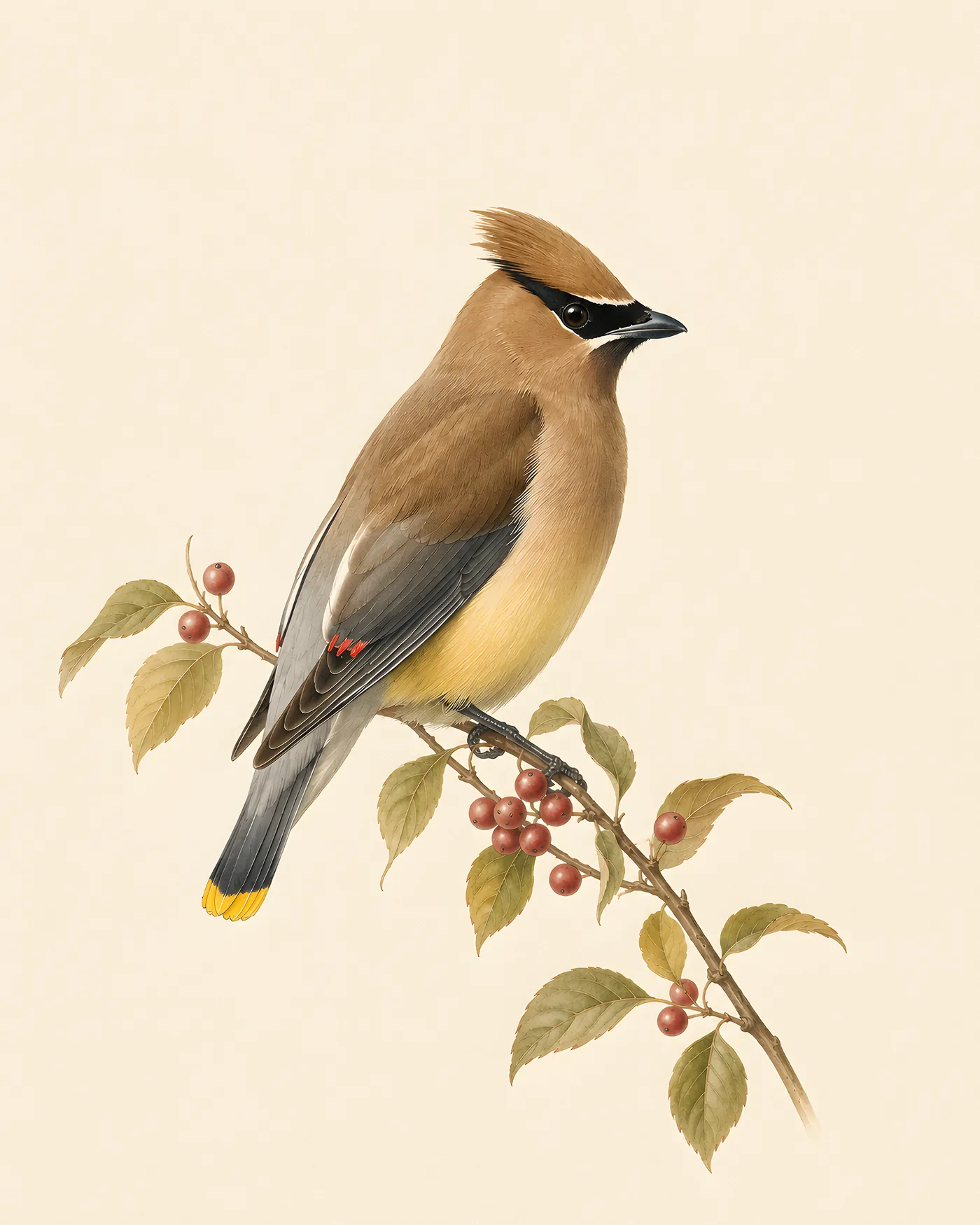
That is the whole idea behind what arrives each month from Wild Bird Post: a four-page letter about the birds you actually watch, a fine-art print worth framing, posted from Ireland on the first Tuesday of the month. The anticipation, the paper, the keeping, all of it on purpose.
The mailbox is worth checking again. It just needs to be given a reason.
Maebh Collins writes the monthly letters at Wild Bird Post and runs the print house Ask About Birds, from Co. Louth, Ireland.